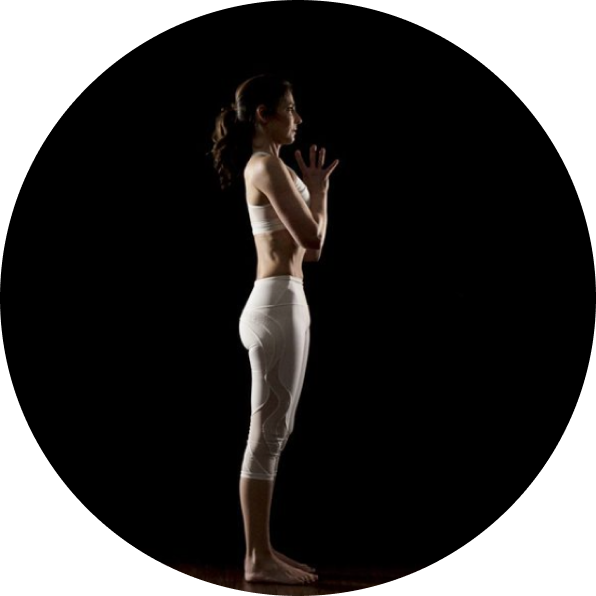
When people think about the “core,” they often picture the coveted “six pack” abs, a flat, visibly front cover for the trunk. But the true center of the core isn’t something visible at all; it’s the spine.
As we teach in LYT with our trademark “Triple S”, the axis of the spine and skull on top is the organizing crux of the body through which every movement, breath, and signal from the nervous system travels.
The spine is both our central pillar and our most sophisticated communication highway, designed not just to hold us upright, but to adapt, respond, and move us through life.
The Paradox of Stability and Mobility
The spine is a paradox by design; it must be stable enough to protect the spinal cord and transmit force efficiently between the upper and lower body yet supple enough to flex, extend, rotate, side bend, and subtly adjust to gravity with every step.
With too much rigidity, the spine loses its shock-absorbing capacity, movement becomes forced, the breath becomes shallow, and load transfers into other areas that can be overly stressed.
With too much laxity, the system lacks support and the body compensates by gripping, overusing the global (the larger movers) muscles and underutilizing the deeper muscles’ responsiveness.
True spinal core stability lives in the relationship between stability and mobility both working together moment to moment.
How the Spine Orchestrates Movement
Every movement made is organized around the spine, the central scaffolding of the body. Reaching your arm, walking, twisting, squatting, even turning your head all require coordinated motion and control of the spinal segments.
The spine doesn’t just “move” the body; it orchestrates movement by sequencing force through the rib cage, pelvis, and limbs.
Efficient movement depends on segmental spinal motion, organized timing between spinal stabilizers and movers, and the ability to transmit force without unnecessary tension.
When the spine loses its ability to articulate or loses support at deeper levels, the body compensates with bigger, less controlled, and less efficient strategies.
This imbalance is often the origin of overuse injuries, chronic pain, and fatigue. Moving our spine and connected ribcage with the harmonized control of deep core muscles is the key to injury prevention and graceful motion.
Deep Core Muscles: The Spine’s Support System
The deepest core muscles don’t exist to create shape or tension but are programmed for organization. The deep stabilizing system, including the multifidus, deep fibers of the transversus abdominis, pelvic floor, diaphragm, and intersegmental spinal muscles, originates along the spine itself.
These muscles provide subtle, anticipatory support before movement even happens. Their role is not to brace or grip, but to instead create enough internal support so movement can be fluid and adaptable.
When this system is functioning well and spinal core stability is optimal, the spine feels buoyant, movement feels supported and less effortful, breath flows naturally with motion, and power transfers efficiently throughout the body.
When these muscles are less responsive, snoozy, and “offline”, the body often defaults to surface-level tension, clenching the abs, locking the ribs, gripping the glutes, mistaking rigidity for strength.
In every LYT class, we always include the beloved “RESET” to better prime these deep stabilizers to perform their ultimate job, assisting us to breathe and move with greater ease and energy.
We intentionally wake up the core container, focusing on spinal and pelvic positioning, to realign and rewire the responsiveness of the central corridor for neuromuscular information and energy transmission.
The Breath-Spine Connection
Breath moves in the chest but is connected through the spine. The diaphragm attaches to the lumbar spine and rib cage where each inhale subtly mobilizes the ribs and spinal segments, and each exhale provides gentle recoil and support.
This rhythmic motion nourishes spinal tissues, regulates intra-abdominal pressure, and directly influences posture and movement quality. Restricted spinal motion often leads to restricted breathing and increased spinal tension.
When spinal mobility and deep support are restored through practices like yoga for back pain, breath becomes three-dimensional again, expanding not just forward, but into the sides and back of the body.
In our RESET, breath is optimized both mechanically and neurologically, to keep us more buoyant as we progress into bigger movement patterns.
Spinal Health and Nervous System Regulation
As the spinal cord is the main communication channel between the brain and the body, how we hold and move the spine directly affects the nervous system.
That’s why our mantra is “posture freaking matters”!
Our uptight, aligned, but not rigid, posture sends signals to the nervous system that creates a calm, centered stability. Fluid, responsive movement similarly signals safety.
Gentle spinal motion, especially when paired with conscious breath, can down-regulate the nervous system, improve proprioception, and enhance the body’s sense of orientation in space. Movement with dynamic alignment isn’t performative, it’s information and regulation.
What True Core Training Looks Like
If the spine is the center of the core, then core training must be more than static holds or repetitive crunches, which offer little carryover into functional movement.
True core training focused on spinal core stability supports the spine without immobilizing it, encourages movement, not stiffness, integrates breath, balance, and neuromuscular coordination, and trains the body to respond appropriately to the present demand.
The goal isn’t to lock the spine in place, but to create a system that knows when to stabilize and when to move.
The spine is not a fragile stack of bones to be protected at all costs, nor is it a rigid pillar meant to be held perfectly still. It is a living, adaptable system, designed for motion, resilience, and expression.
When we restore its suppleness and support through targeted spinal core stability work and yoga for back pain practices, we don’t just improve posture or prevent pain. We change how the body moves, how we breathe, and how we experience ourselves in the world.
The spine isn’t just the center of the core; it’s the center of how we live in our bodies.