

You take somewhere around 20,000 breaths a day, which makes breathing the most repeated movement your body does, yet it’s the one very few people train. In my private sessions, group classes, and workshops, I frequently see people begin a session with a tight neck, a cranky low back, or shoulders that seem to live up by their ears. They tell me they have stretched, foam rolled, or visited a chiropractor to release the tightness. Almost inevitably, the tension remains or keeps coming back. Often, the missing piece isn’t another stretch or adjustment, but their breathing pattern.
Breath Is Movement, Not Just Air
In our LYT RESET, when we align our posture, mobilize our joints, and work our core’s dynamic strength, we include the breath as part of the integrated movement. The reason is simple: breath is movement, not just air.
When you breathe well, your ribcage expands in all directions: front, sides, and back. Your diaphragm lowers and rises like a piston, and your belly, pelvic floor, and low back respond to the pressure change, making breathing a whole-trunk movement.
What Happens When Your Breathing Pattern Gets Stuck
When the pattern gets stuck, dysfunctional breathing tends to show up in a few typical ways: upper chest breathing, rib flaring, or holding the belly in all day. With these imbalances in full breath movement, other muscles must pick up the slack. The neck and upper traps become accessory breathing muscles, the low back stiffens to stabilize a trunk that isn’t sharing pressure well, and the jaw clenches.
None of these are “bad” muscles that need to be fixed; they are just working overtime for a job that was never theirs. And therein lies the rub! You can’t always stretch your way out of restriction, because you just end up stretching the helpers instead of changing the pattern.
How Your Breath Talks to Your Nervous System
With every breath, your nervous system receives clear messages. Quick, shallow, high-chest breathing tells your body to stay on alert, while slower, fuller breathing with a longer exhale tells the nervous system that things are okay and it can downshift. Your breathing pattern shapes both how your body moves and how safe it feels to let go.
Tension is often protection, or a signal from the nervous system that something needs to change. When the nervous system feels braced, muscles stay activated no matter how much you stretch them. Fortunately, the breath is one of the simplest tools for nervous system regulation. We can improve the conversation between brain and body, nervous system and muscles, and create more integrated movement in the breath and in daily function.
Try This 60-Second Breathing Pattern Self-Check
Use this quick check to tune in, observe, and begin rewiring your breath mechanics. You can do it sitting or lying on your back.
- Place one hand on your upper chest and one on your lower ribs.
- Take three normal breaths. Don’t fix anything yet; just notice.
- Ask yourself: Which hand moves first? Do my ribs widen at the sides, or does everything lift toward my chin? Can I feel any movement in my back body?
- Notice your exhale. Does it let go, or do you push it out?
You’re just gathering information that reveals the habitual movement of your breath. Most people are surprised by how little their ribs move.
Two Gentle Breathing Resets to Try
Now, try these two gentle resets, like the ones we practice in our LYT classes.
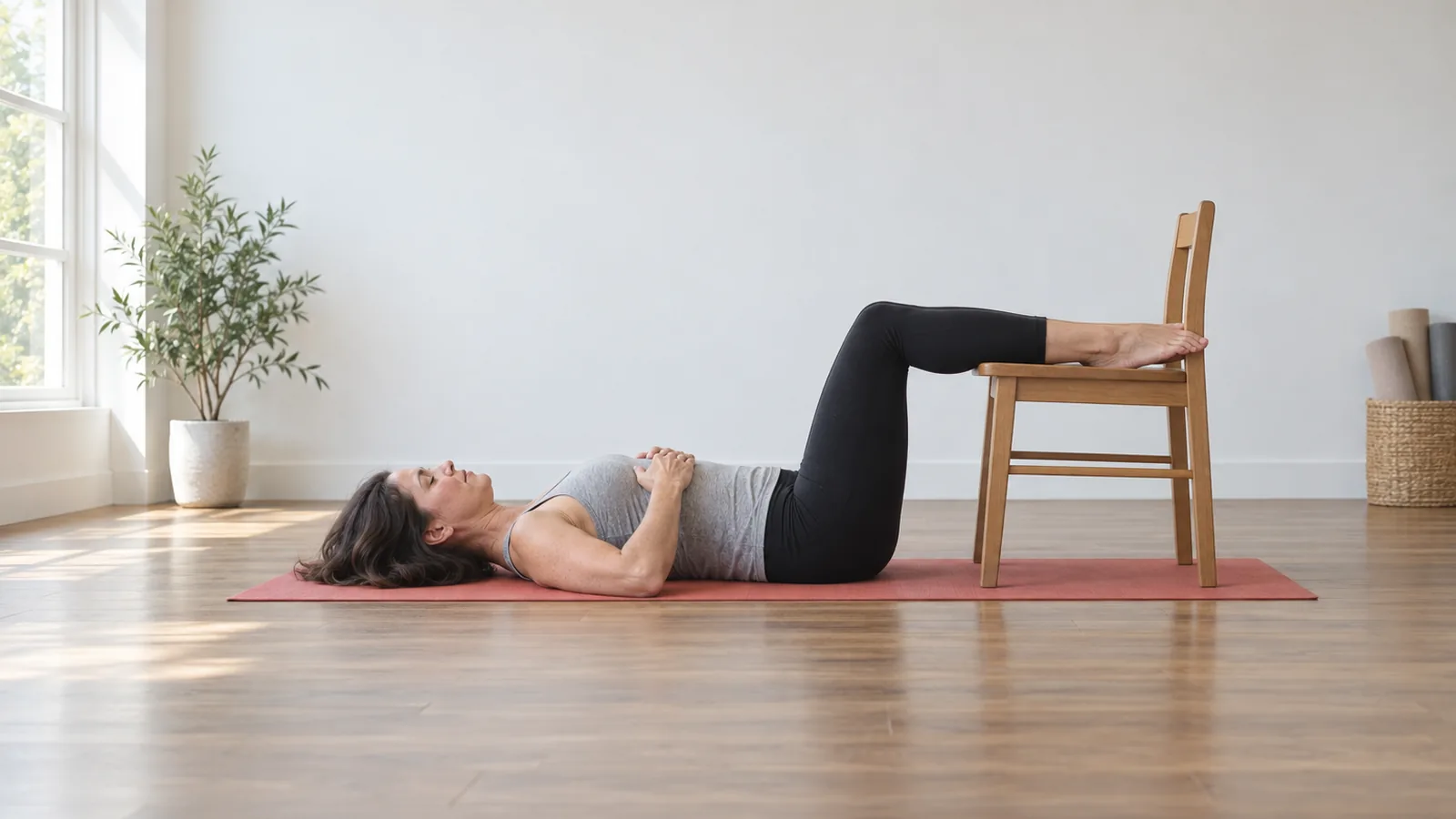
- 90/90 positioned breathing: Lie on your back with your calves resting on a chair or couch, hips and knees at about 90 degrees. This position softens the over-recruited back and neck muscles and makes it easier to feel your ribs. Inhale through your nose and let your lower ribs widen. Exhale slowly through your mouth, as if fogging a mirror, and feel your ribs draw down and into the body. Try five to eight slow rounds.
- Side-body expansion: Sit tall or lie on one side. Rest your top hand on your front ribs (or on the side of your top ribs if you are side-lying) and breathe into the space under your palm, as if you’re gently pushing your hand out to the side. Then switch sides and work on finding the lateral rib expansion that gets lost with chest breathing.
Keep both moves gentle, and if you feel lightheaded, back off and let your breath return to normal. Rewiring the breath might be challenging, but it shouldn’t feel effortful.
Bring Breath Awareness Into Daily Life
Ultimately, the goal isn’t to sit around doing deep breathing exercises forever, but to bring this awareness into how you live.
- Walking: Let your ribs gently swing with your steps instead of locking them down.
- Lifting: Exhale on the effort and notice whether your ribs stay stacked over your pelvis.
- Sitting: A few times a day, check whether your belly is gripping and not allowing the movement of the breath and ribs.
The Takeaway Message
If you’ve been working on your body and feeling stuck, look at the thing you do 20,000 times a day. Before your next stretch, take three breaths, notice where they go, and repeat these check-ins often. This awareness is where change begins, and it’s the catalyst for changing the movement of the breath so that it can expand and support you in movement and in life.
Put Your Breath Into Practice
Explore LYT breathwork classes on the LYT Daily, where we integrate the movement of the breath with the movement of the body to help you feel LYT UP!
